
Spring Newsletter
posted on
March 28, 2017
Thank You
First we want to take a moment to thank all of the families, individuals, and businesses who have supported our mission of pure food and regenerating the land. Your encouragement and support has been incredible. We only began this direct marketing journey in October but already we have met so many incredible people. Thank you for choosing to vote with your food dollar to support regenerative clean agriculture. You are making a difference!
New Chicks
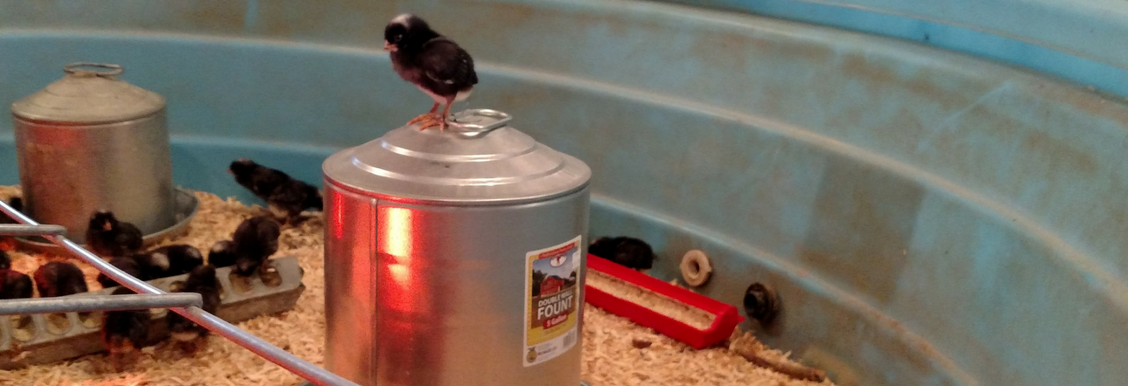
So with the spring we decided to add more laying hens to the operation. But every good hen has to start as a good chick and ours are no exception. This will be our first attempt at brooding (its when you get chicks at 2 days old) and raising chicks. (Full disclosure: we purchased our current hens from another farmer right when they started laying). Needless to say it has not been without challenges. But really the challenges are what make the experience memorable right? It all started the day before the hatchery said the chicks would arrive. I jumped out of bed at 5 a.m. ready to start a new day. I had it all planned out. I was going to be completely prepared for the chicks arrival the next day. I would prepare their comfy home (a retrofitted livestock water tank) by filling it with bedding, setting up the heat lamps so it was nice and toasty, and setting out convenient water and food locations. I had even taken the time to prepare my own custom gourmet chick starter (non-GMO of course). These chicks were practically going to be checking into a five star resort. After finishing up my plans for the Hilton Chick Edition, my thoughts were interrupted by a ringing telephone (at 6 a.m.). It was the post master- my chicks had arrived. I am rarely wordless on the telephone, but the postmaster must have thought I was still asleep. I was so stunned I could barely mutter an "oh! ah ah ah ah, ha ha here now? ah ah ah ah I'll ba ba be there in a few minutes." Well lets just say that the day became quite rushed and after three trips to the farm store and a few new heat lamps the chicks were starting to warm up and I was thoroughly exhausted.
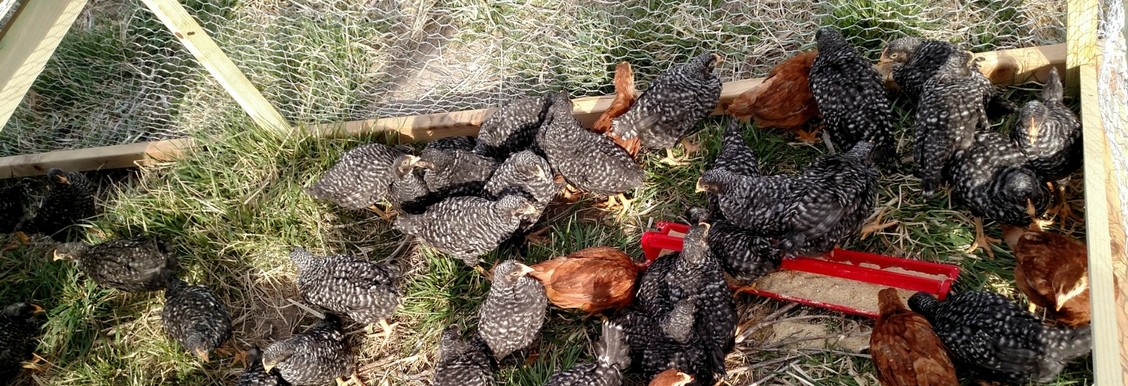
But I must not have done everything wrong. Because here they are only 8 short weeks later, huge and enjoying some fresh green pasture. You may notice these look much different than our current chickens. This year we decided to try Barred Rocks and Rhode Island Reds. They are both heritage breeds known to be good winter layers and foragers as well as possessing a little more chicken sense and hardiness. Needless to say we are excited.
Muddy Calves
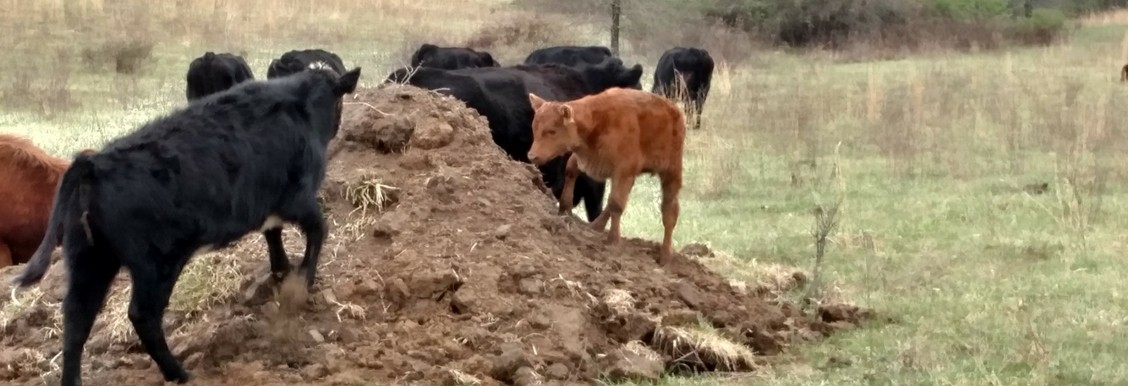
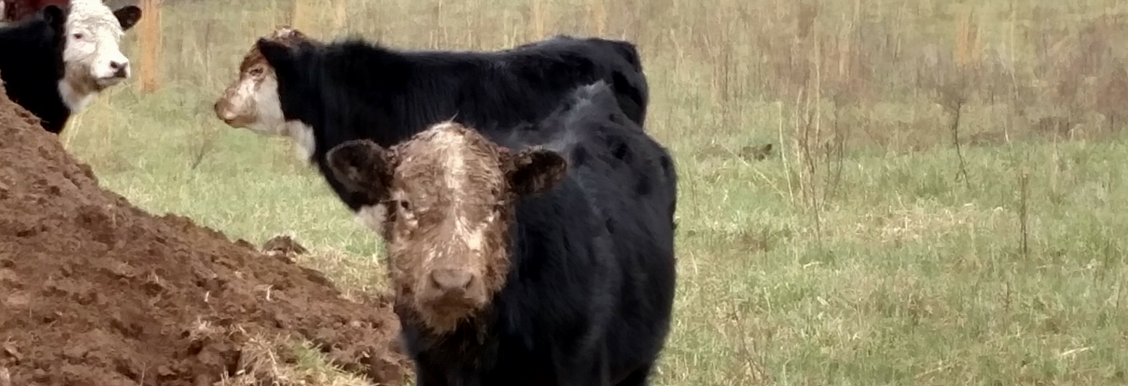
So this had been a very dry spring. Some had thought worrisomely dry. I just thought it was a great opportunity to work on some land improvement projects. This pile of dirt was the result of one of those projects, and the calves thought it was more fun than chasing goats. Of course it has now turned quite damp and the grass is growing fast! The calves have also gotten a bit muddy.
Green Grass
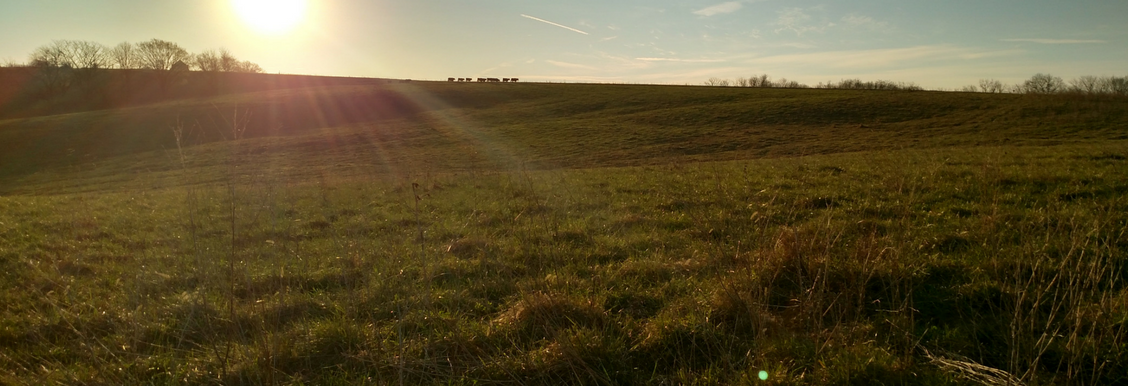
Our focus on using the livestock as tools to enhance natural cycles for land health is really bearing fruit! Our grass is coming on very early this spring! You might say all the grass is coming on early. That is true but there is a remarkable contrast between our fence line and the neighbors. All that aside we are excited to see how rapidly this farm has improved and are looking forward to what this year holds: more grass, clearer water, abundant clean nutrient dense food.
Land Improvements
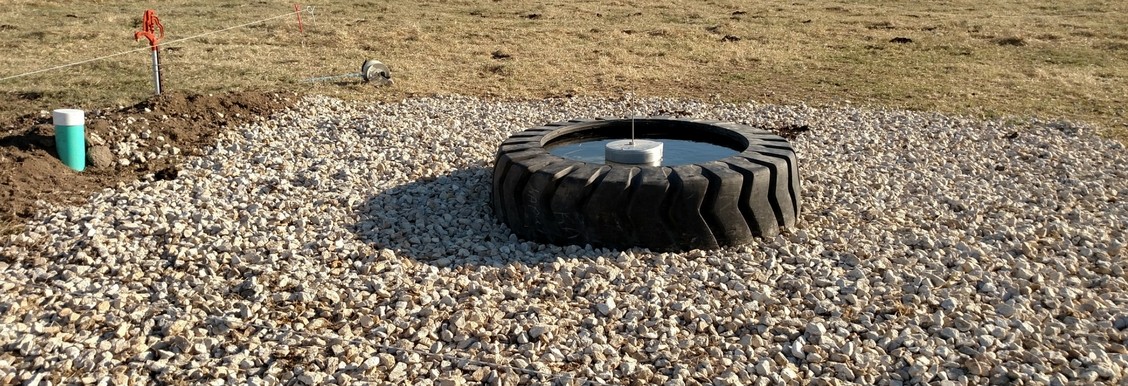
In our mission to heal the land we use the unique gifts and abilities of the animals to assist us. Cows trample grass and build mulch, goats and sheep convert weeds into fertilizer, chickens sanitize, and hogs create silvopasture (maybe someday - we don't have hogs yet). However in order to allow the animals to use their natural abilities they have to be out on the pasture and that means they will need water. Water has been one of our most limiting natural resources on our farms so this spring we set out to rectify this. We are partway finished with several thousand feet of new water line and a few new tanks and hydrants that should allow us to better utilize the animals to improve and restore the land. The picture below is of one of our new tire tanks. These tanks are made from repurposed earth mover tires. We bury the tanks in the ground to take advantage of geothermal heat and so our sheep and goats can easily drink.
Judah's First Farm Adventures
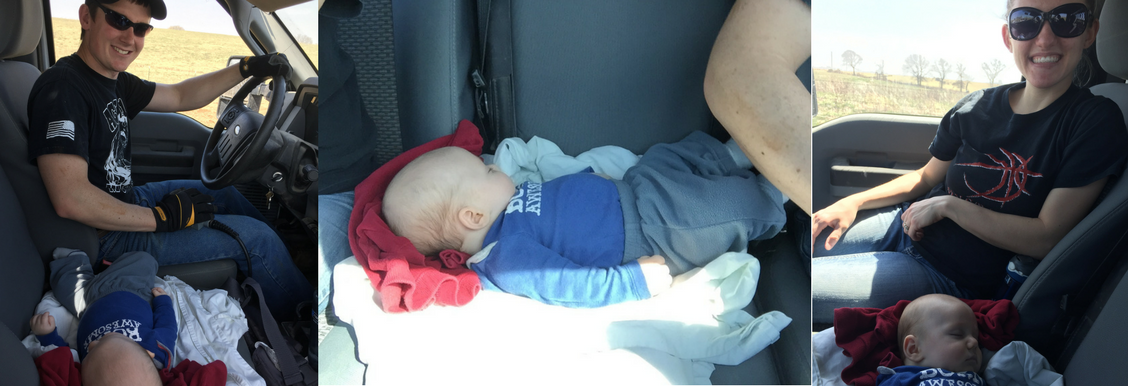
So Judah has officially joined the farm crew. Though we catch him taking naps on the job we have to give him a little slack. It is after all his first few weeks on the job :). All kidding aside we are so blessed to have this precious baby boy in our lives! It was always our dream to raise our family on the farm. It may be more work to bring him along with us now, but it will be worth it when he gets a little bigger and besides he is just so cute!
News
So we are excited that we will soon be part of the Boone County Farmer's Market. That begins Saturday April 15th 8:00 A.M.-12:00 P.M. We will also be shifting our food drop days from Thursdays to Saturdays. There will be a food drop for pickup at the market and another for later in the afternoon in south Columbia (official location coming soon). We also now have drop locations in Sedalia and in Rocheport. Check out the locations here. If there isn't a location near you contact us to talk about setting one up.
We also now have pastured poultry available for pre-order. They will be ready by the second week of June. Save Money by preordering. They are only $3.75 lb when you pre-order but will be $4.00 lb once we have them in the freezer.
We hope you are enjoying the spring weather and some nutrient dense food!
Your regenerative agriculturalists,
-David, Mariah, and Baby Judah
P.S. If you are reading this and are wondering why you didn't receive it in your inbox our newsletter sign up form was malfunctioning for a period of time so we did not get you added to the list. You can go to our home page to join the newsletter to stay up to date and receive special offers.


